
Have you ever found yourself saying:
“Part of me knows I need to make a change… but another part of me is scared.”
“Part of me wants to speak up… but another part is telling me to stay quiet.”
“Part of me knows I’m safe now… so why does another part of me still react this way?”
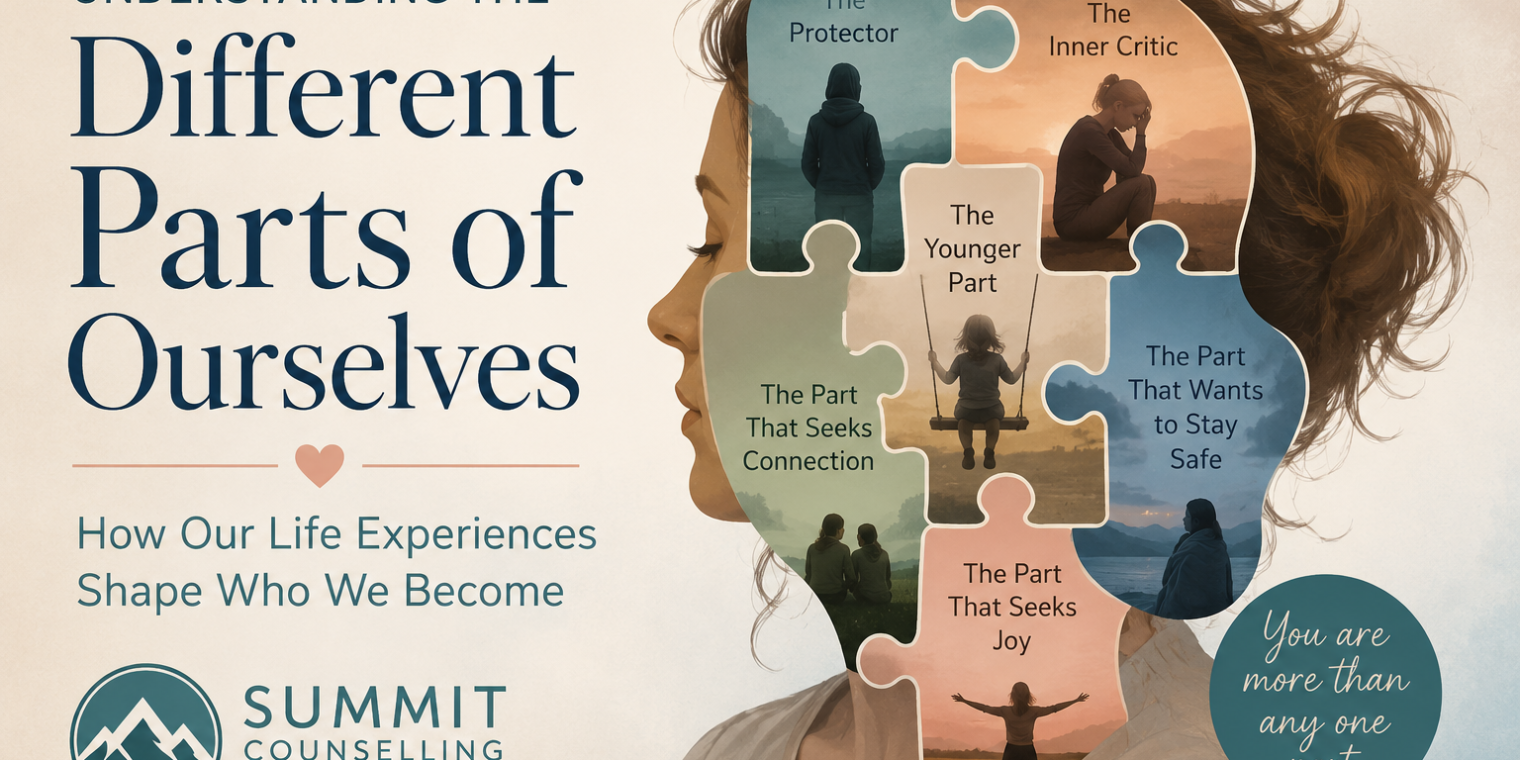
If you’ve ever used the phrase “part of me,” you’re describing something many therapeutic approaches recognise: we are made up of different parts, feelings, memories, and protective responses that develop throughout our lives.
These parts are not signs that something is wrong with us. They are often parts of ourselves that developed to help us survive, cope, and protect us through our experiences.

How Our Parts Develop
From childhood, we are constantly learning about the world around us.
We learn through our relationships, our environment, and the experiences we go through. When something difficult happens, our minds and bodies adapt.
For example, a child who grows up feeling responsible for keeping the peace in their family may develop a part that becomes highly controlling or organised. That part may have learned:
“If I can keep everything under control, maybe things won’t fall apart.”
As an adult, that same protective part may still show up through perfectionism, difficulty relaxing, or feeling anxious when things are uncertain.
Another person may have learned that expressing emotions was unsafe or that their needs were not always met. A protective part may develop that says:
“Don’t rely on anyone. Stay independent. Don’t get too close.”
The strategies that helped us as children do not always fit our adult lives. But the intention behind them was often protection.
Parts Work, IFS, and Inner Child Work
You may hear different terms used when talking about this approach, including Internal Family Systems (IFS), parts work, or inner child work.
While each approach has its own framework, they share a similar idea: different aspects of ourselves develop through our life experiences, and understanding them can help us create more compassion and connection within ourselves.
The goal is not to get rid of parts of ourselves.
The goal is to understand them.
Often, the parts we struggle with the most are the parts working the hardest to protect us.
The anxious part.
The people-pleasing part.
The inner critic.
The part that avoids difficult conversations.
The part that shuts down when things feel overwhelming.
There are no “bad” parts of ourselves. Even the parts we dislike usually developed for a reason.
Why Do We React in Ways That Feel Younger Than Our Age?
Sometimes people say:
“I know I’m an adult, but in those moments I feel like a child again.”
This can happen because our nervous system stores emotional learning from past experiences.
Our reactions are not always based on what is happening in the present moment. Sometimes our body responds based on what something reminds us of.
You might notice your tone of voice changes, you become defensive, you feel small, or you react in a way that feels unlike yourself.
The aim is not to judge that reaction or force yourself to change it.
The aim is to become curious:
“What is this part of me trying to protect?”

Why I Use This Approach in Therapy
Through my training in trauma therapy and EMDR, I noticed something important when working with clients processing difficult experiences.
Sometimes, even when someone understood their trauma and was processing memories, there was still something getting in the way.
The disturbance would not reduce because a protective part was still doing its job.
For example, an avoidant part might say:
“Don’t go there. It isn’t safe.”
An inner critic might say:
“You should be over this by now.”
A disconnected or shut-down part might step in to prevent overwhelming emotions.
When we take time to understand and work with these protective parts, rather than fighting against them, clients often find that processing becomes easier and more effective.

Working With Our Parts Instead of Against Them
In sessions, I often use the idea of a “conference table.”
Imagine all the different parts of you sitting around the table.
The anxious part.
The protective part.
The part that wants connection.
The part that wants to avoid being hurt.
Initially, many people meet these parts with judgement:
“I hate that I overthink.”
“I wish I wasn’t so emotional.”
“Why can’t I just stop doing this?”
Instead, we begin to approach them with curiosity:
“Why did this part learn it needed to do this?”
“What is it afraid would happen if it stopped?”
“What does it need from me now?”
The goal is to help these parts feel heard and supported by your adult self.
Rather than being controlled by old survival strategies, we can develop a more compassionate relationship with ourselves.

You Are More Than Any One Part
Every part of us carries a story.
Some parts carry fear.
Some carry sadness.
Some carry courage.
Some carry the lessons we learned when we were younger.
Healing is not about silencing these parts or becoming a completely different person.
It is about understanding ourselves more deeply, creating internal safety, and helping every part of us know that we are no longer in the same place we once were.
The next time you notice yourself thinking:
“Part of me wants this… but another part doesn’t…”
Pause.
Instead of asking:
“What’s wrong with me?”
Try asking:
“What is this part trying to protect?”
You might be surprised by what you discover.
Looking for support?
If this article resonates with you, you don’t have to make sense of these experiences on your own.
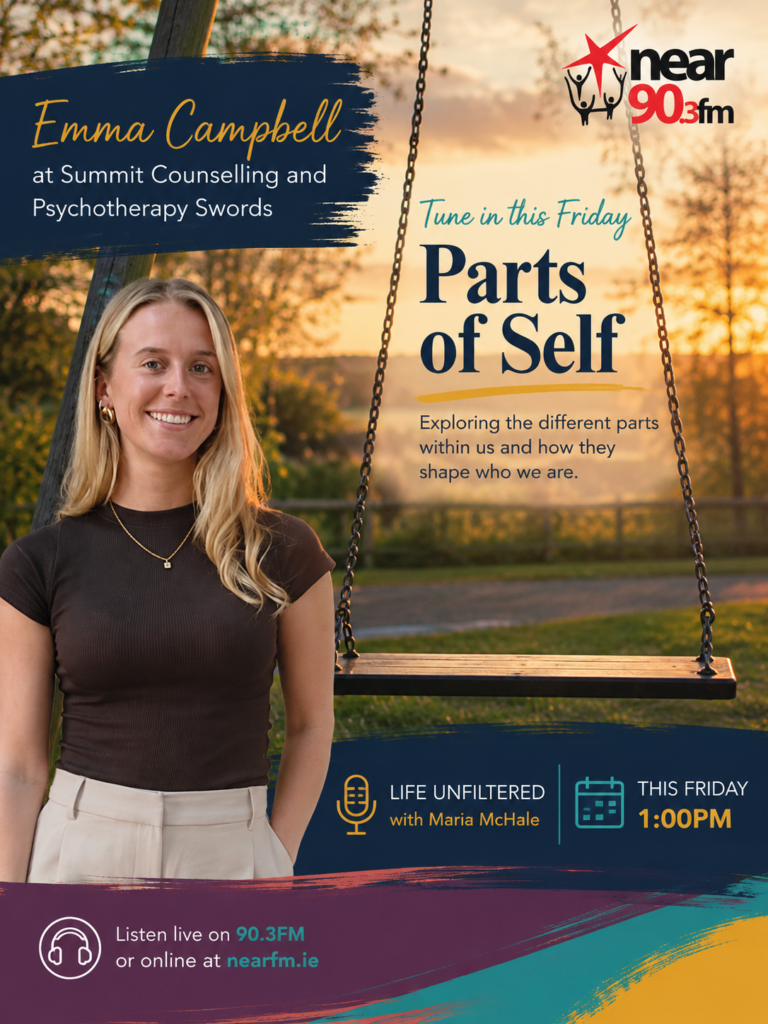
Emma Campbell offers trauma-informed counselling for adolescents and adults at Summit Counselling and Psychotherapy Swords. Drawing on Person Centred Therapy, EMDR-informed practice, CBT, and parts work approaches where appropriate, she provides a safe, supportive space to explore the different parts of yourself with curiosity and compassion.
If you’d like to learn more or see whether counselling feels like the right next step, you can book a free 50-minute consultation with Emma at Summit Counselling and Psychotherapy Swords.