
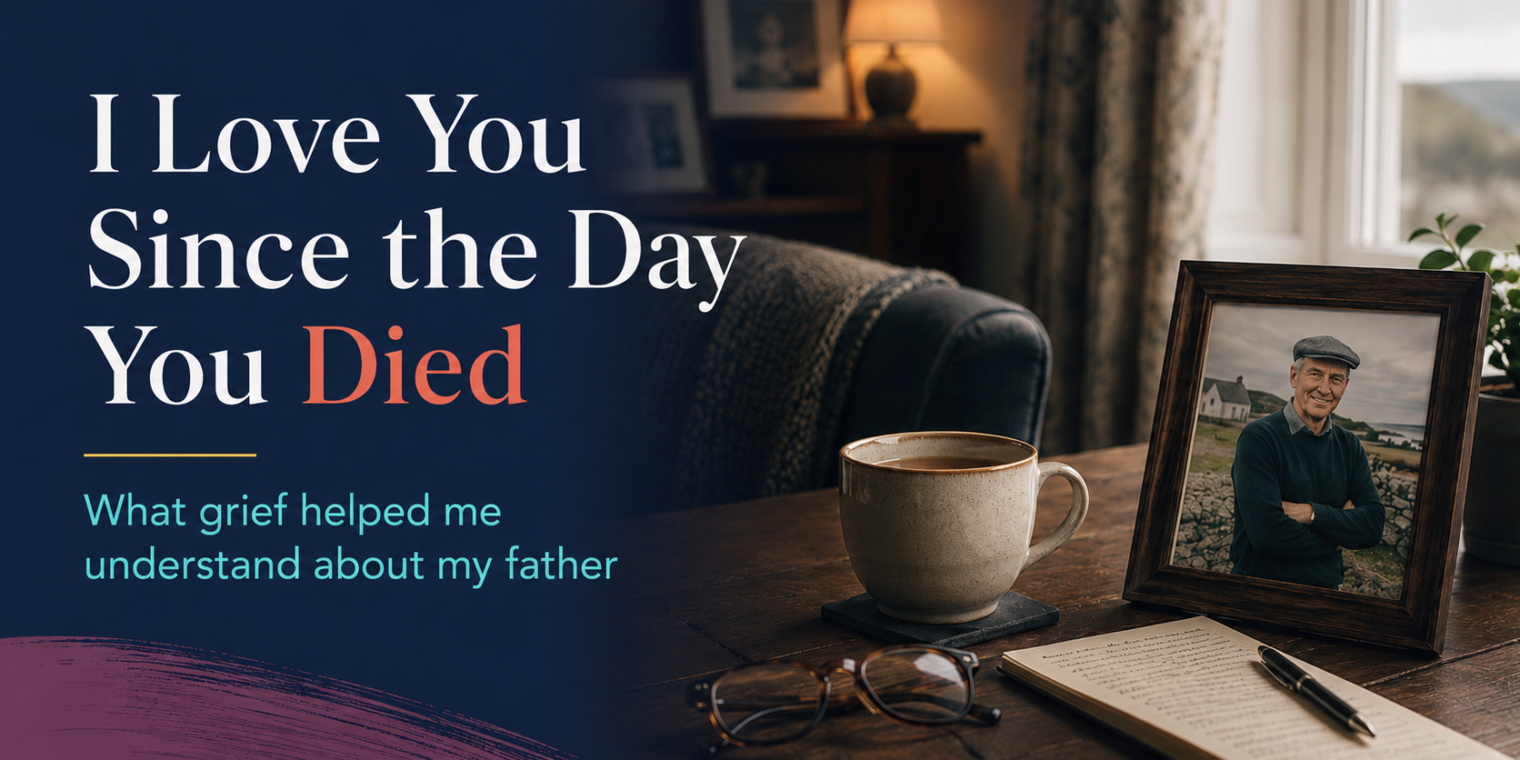
Recently, I read a book called I Love You Since the Day You Died.
The title caught me before I’d even opened it. Someone had recommended it to me, but there was something about those words that already felt painfully honest. Complicated. Human.
As I read, something unexpected happened. It bypassed my defences.
I found myself crying at different points, not dramatically, not in a way I could fully explain. Just quiet moments where something inside me softened, and memories of my father started to rise in a way they hadn’t before.
My dad died two years ago. And one of the hardest things to admit is this: I don’t think I fully understood how much I loved him until after he died. Or maybe, more accurately, how much he had loved me.
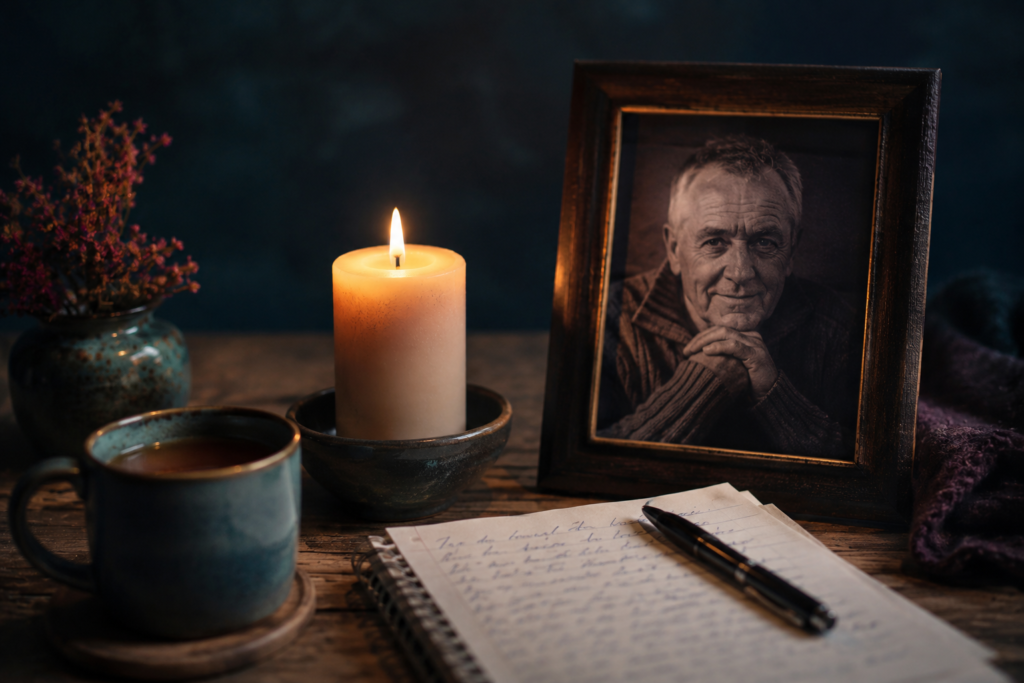
My father was an old-school Dublin tradesman. Strong, resilient, direct. He worked long hours, came home exhausted, and like many men of his generation, often went for pints after work. Looking back now, I can see how much of his life was taken up by work, pressure, and survival.
But I can also see something I couldn’t fully understand when I was younger.
Everything he did was rooted in sacrifice.
My dad grew up poor. Providing for his family wasn’t something he spoke about emotionally. He communicated love through action. Through work. Through reliability. Through showing up, again and again, no matter what life threw at him.
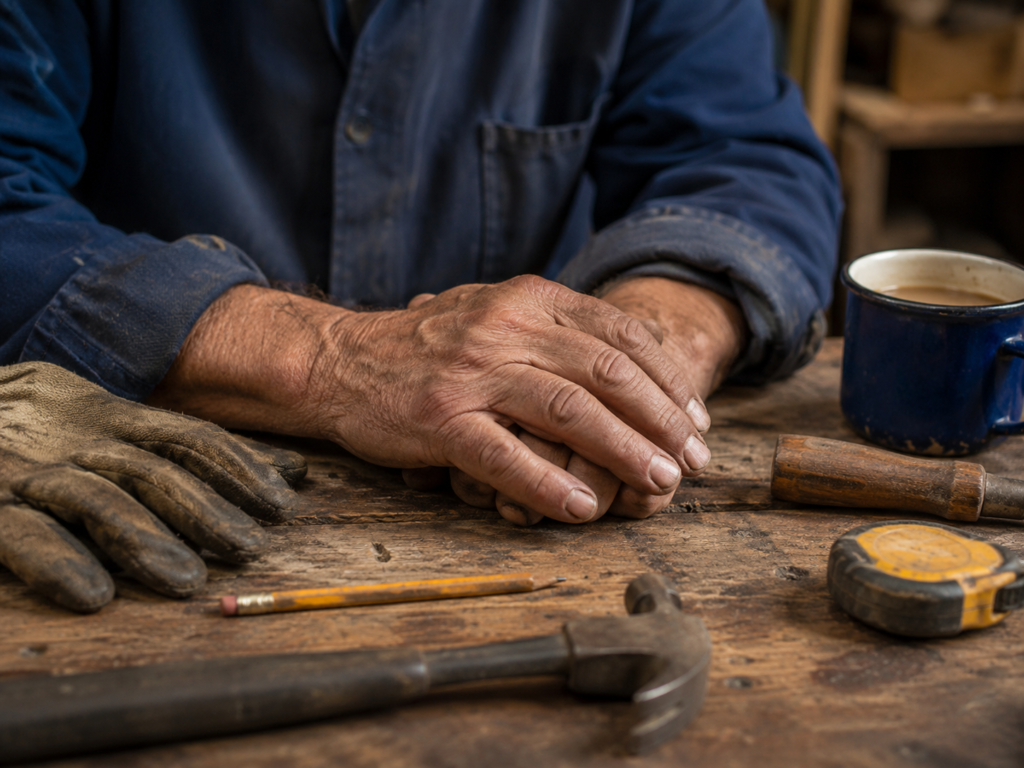
One of my strongest memories of him is simple.
He’d be sitting in the front room with a cup of tea, glasses perched on the end of his nose, flicking through the post and asking me about my day.
What strikes me now isn’t the conversation itself. It’s the feeling underneath it.
No matter what happened in life, my dad was on my side.
Even now, after his death, I still carry that feeling with me.

As a counsellor, I often sit with people who are grieving. One thing I’ve learned, both personally and professionally, is that grief isn’t only about missing someone.
It’s also about continuing to understand them.
Sometimes, after someone dies, memories return with new meaning. Situations suddenly make sense. Reactions we once judged differently become clearer through adulthood, parenthood, suffering, or simply the passing of time.
I find myself doing this often with my dad.
Revisiting moments.
Understanding him not just as “Dad,” but as a man. A husband. A provider. Someone carrying pressure, fear, exhaustion, pride, pain, and responsibility.
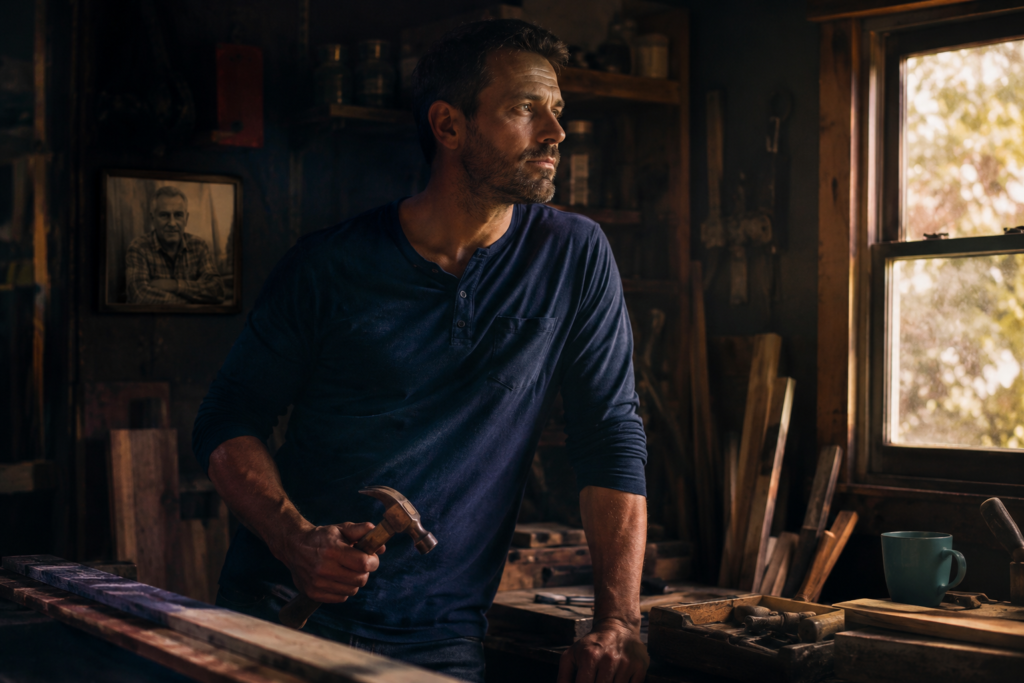
There were also multiple losses before his actual death.
Eight years before he died, my father survived throat cancer and had a full laryngectomy. It changed his life completely, but what stayed with me was the way he faced it. His attitude. His determination. His refusal to give in.
Then, in 2020, he developed an infection on his spine, which resulted in a catastrophic spinal injury. He became tetraplegic. Overnight, the physically capable man I had always known was forced into a completely different reality.

In many ways, our family began grieving long before he died.
Anyone who has watched a loved one go through severe illness or spinal injury will understand this kind of layered loss. There is the loss of independence. The loss of identity. The loss of the physically strong person who once fixed things, carried things, solved problems, and moved through the world with certainty.
For my dad, there was also the loss of dignity at times.
And for those who love someone in that position, there can be a particular kind of heartbreak in witnessing moments where their humanity starts to disappear beneath routines, medical systems, appointments, lifting schedules, medications, and practical tasks.
Sometimes, he became a task to complete rather than a person to truly see.
Those experiences stay with families.
And they matter.
What I recognise now is the resilience it took for him to keep living through all of that. To adapt to a body and a life he never chose. To keep trying to be himself despite enormous suffering.
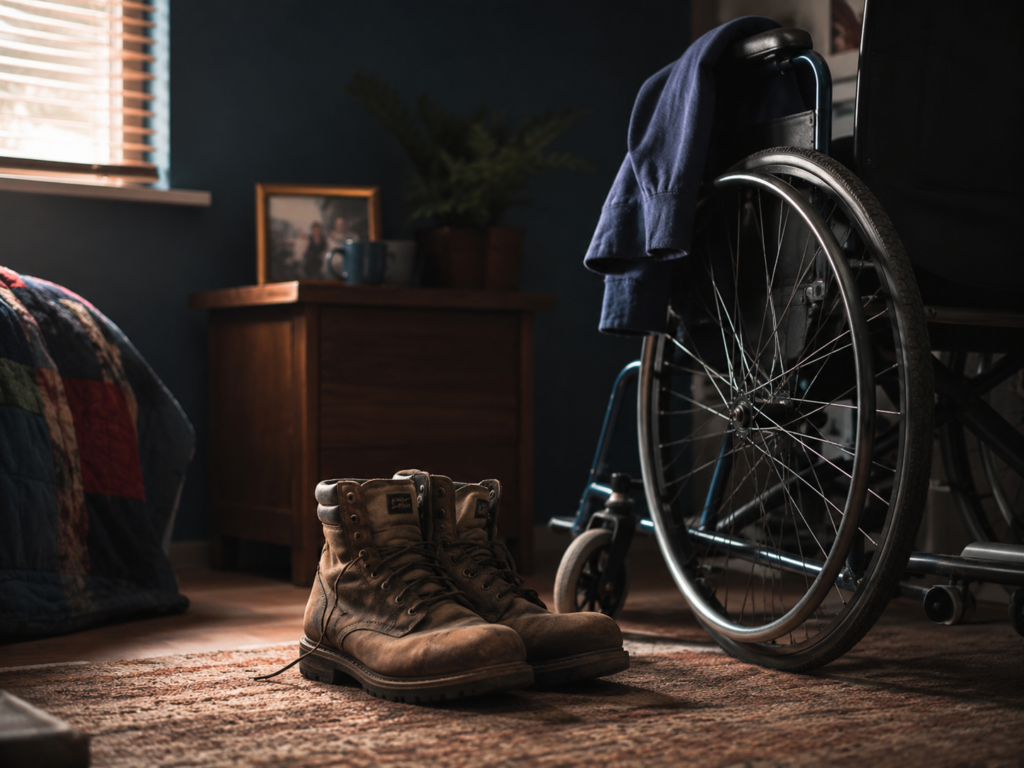
I don’t think I fully appreciated that strength at the time.
Grief has also changed how I work as a counsellor, especially with clients who have witnessed suffering, disability, or long-term illness in someone they love.
Because grief is rarely neat. It’s rarely just sadness. It can be anger, frustration, shame, relief, guilt, gratitude, numbness, love, and exhaustion, sometimes all within the same hour.
The book described grief in a way that deeply resonated with me: like a tidal wave.
Sometimes it crashes into you unexpectedly and overwhelms everything. Other times, it disappears completely for a while, only to return later in a different form.

That feels true to my experience. Society often struggles with grief. People say things like “time heals” or “let them go. “But I don’t believe grief is something we simply “get over.” And honestly, why would we want to let go of someone we truly loved?
Grief changes shape over time, but it stays with us because love stays with us.
Grief is the mark they left.
It’s the continuation of the relationship.

I still talk to my dad internally. For the last eight years of his life, because of throat cancer, his voice was no longer the same voice I had grown up with. Yet strangely, in my mind, I still hear both versions of him. I can still hear his breathing. And when life gets difficult, it’s still his voice that appears in my head.
“Get your head down and get on with it.”
“Set your sights on it.”
“Work your arse off.”
Sometimes he appears when I’m doing DIY, finding a bargain, trying to fix something, or simply missing him.
And sometimes I realise I’m becoming more like him.
Some of that comforts me. Some of it confuses me. Some parts I understand now, and some parts I probably never will.
Maybe that’s part of grief too.
One of the last conversations I had with my father was about whether he had been a good dad.
At the time, I reassured him.
But if I could answer him again today, I’d say something deeper.
You were more than that.
You were good and bad.
Patient and impatient.
Strong and vulnerable.
You lost your temper.
You worked too much.
You didn’t always say sorry straight away.
But you showed conviction in your values.
You taught resilience.
You taught sacrifice.
You taught me what family means.
Most importantly, you were human.
And strangely, I love you even more for those imperfections.
When hope disappeared for me at different moments in life, it was often your voice in my head that kept me moving.

Reading I Love You Since the Day You Died reminded me of something important:
I truly love my dad.
And for anyone grieving while reading this, I want you to know something too.
You’re not alone.
Trust your feelings.
The intensity of grief reflects the depth of connection. The pain exists because the love existed.
So honour it.
Honour them.
Speak about them.
Remember them.
Carry them forward.
Not by “moving on,” but by moving with them in a new way.