
Does counselling actually work?
It’s a fair question.
If you’re thinking about sitting down with a stranger and talking about some of the most difficult parts of your life, you probably want to know whether it’s actually going to make any difference.
I can answer that question as a psychotherapist.
But I can also answer it as someone who has sat in the other chair.
And I think my answer today is quite different from the answer I would have given during my first few counselling sessions.
I thought my counsellor was going to fix me
When I first went to counselling, I wasn’t in a good place.
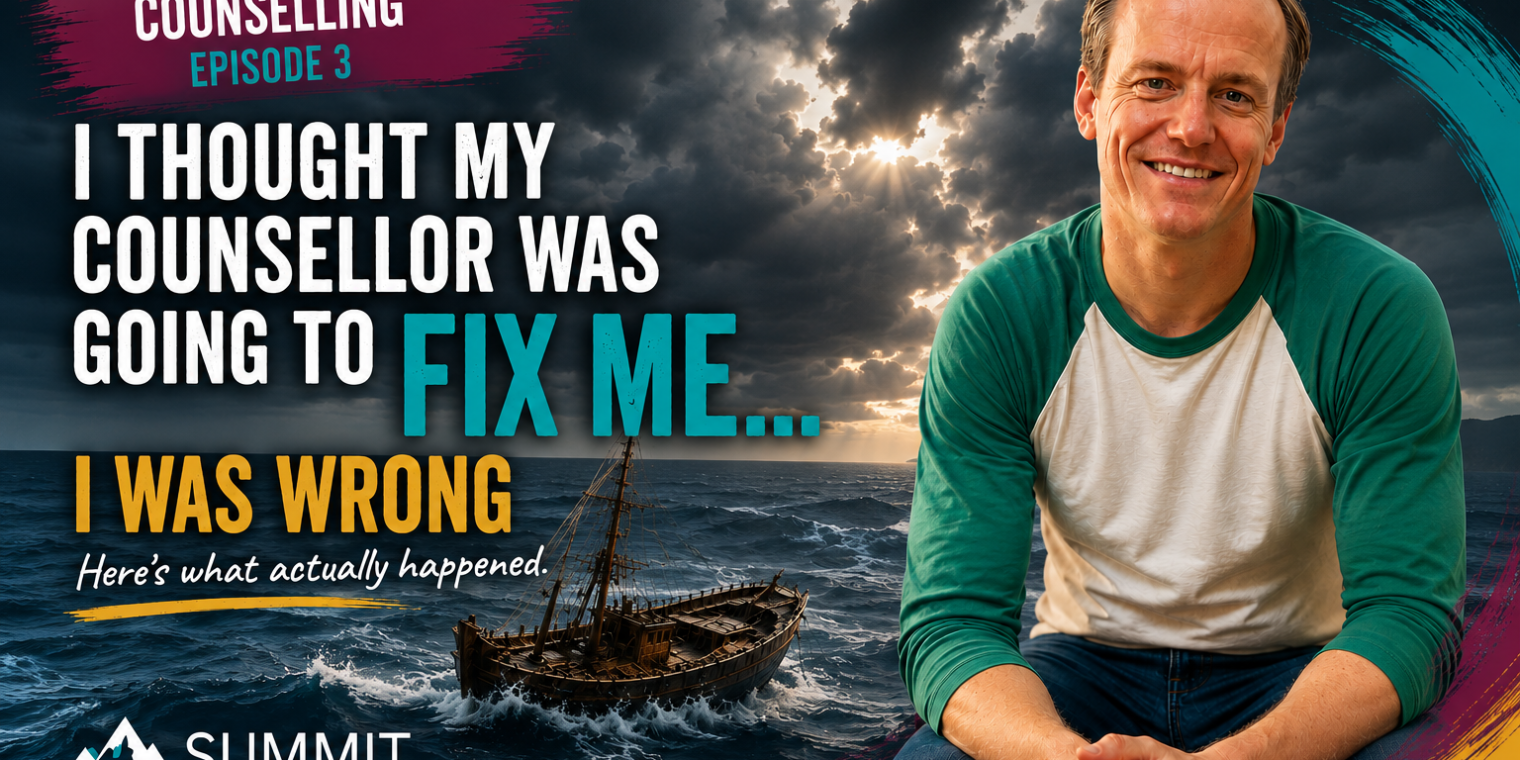
The best way I can describe it is that I felt like a ship caught in a storm without a sail.
And I was sinking fast.

I’d dropped what felt like a bomb in my own life, and the frightening part was that I didn’t really understand why I’d done it.
I felt overwhelmed.
Hopeless.
Terrified.
So, I went to counselling expecting answers.
I thought my counsellor would listen to everything that had happened and eventually tell me:
“This is why you did it.”
I wanted them to tell me what was wrong and what I needed to do to fix it.
Guess what?
They didn’t.
Watch: Does Counselling Actually Work?
In this video, I talk more about my own experience of counselling and what I eventually came to understand about how change happens.
At first, I wasn't sure counselling was doing anything
I can remember those early sessions.
My counsellor listened.
They asked questions.
They were curious about what I was experiencing.
But I was still leaving the room with the same life waiting for me outside.
The problems hadn’t magically disappeared.
I still felt overwhelmed.
There were probably times when, if you’d asked me whether counselling was working, I would have said:
“I don’t know.”
Looking back, I can see that something was happening.
It was just much slower than I expected.
They didn't rescue me from the storm
I’ve continued to think about that image of being a ship in a storm.
I thought my counsellor’s job was to rescue me.
It wasn’t.
Instead, they helped me understand the storm I was in.
We started looking at how I was responding to certain situations.
Why did I feel like that around this person?
Why did certain situations affect me so strongly?
Why did I respond in a particular way?
And, importantly:
What could I do to help myself?
There wasn’t usually one big answer.
It was more like patching holes in the boat.
One hole at a time.

A lot of counselling happened outside the counselling room
This is something I didn’t understand when I started.
The work didn’t finish when the session ended.
I’d leave counselling and think about something we’d discussed.
Then something would happen during the week and I’d notice my reaction.
Maybe I’d try something differently.
Sometimes it worked.
Sometimes it didn’t.
Then I’d bring that back into the next session and we’d explore it again.
Session.
Reflection.
Trying something.
Getting it wrong sometimes.
Coming back.
Understanding a little more.
The change was gradual.
The boat didn’t suddenly become brand new and the storm didn’t disappear.
But eventually, it wasn’t taking on water in the same way.
Then something else began to change
This is probably the part of counselling that has stayed with me most.
My counsellor had taken a genuine interest in understanding me.
They were curious about me.
They cared about what I was experiencing.
And they weren’t sitting there judging me or telling me who I should be.
Over time, something of that relationship started to grow inside me.
The genuine interest my counsellor took in understanding me slowly became the interest I began taking in understanding myself.
Instead of constantly asking:
“What’s wrong with me?”
I began asking different questions.
“Why do I feel like this?”
“What do I need?”
“Why does this matter so much to me?”
And eventually:
“What do I actually want from my life?”
That was a big change.
I wasn’t just trying to stop the boat from sinking anymore.
I was starting to think about where I wanted to steer it.

So, does counselling work?
For me, it did.
But not in the way I originally expected.
My counsellor didn’t fix me.
They didn’t give me a list of instructions for how to live my life.
And they didn’t make life’s storms disappear.
What happened was slower and, ultimately, much more important.
I began to understand myself.
I became more interested in my own needs, feelings and reactions.
I began making different choices.
And the care and curiosity I had experienced in the counselling relationship gradually became something I could offer myself.
Professional counselling also isn’t based on the counsellor taking control of someone’s life. The IACP describes counselling and psychotherapy as providing an impartial relationship where clients can explore their difficulties and develop more satisfying and resourceful ways of living, while respecting the client’s capacity for self-determination.
For me, that’s much closer to what actually happened.
How long does it take for counselling to work?
There isn’t one answer.
People come to counselling for different reasons, with different histories and different things happening in their lives.
Some people may begin noticing changes relatively quickly.
For others, building enough trust to explore what is happening can itself take time.
My own experience certainly wasn’t one dramatic breakthrough.
It was lots of smaller moments that gradually added up.
That’s why I think it can be difficult to judge counselling purely by asking:
“Do I feel better yet?”
Sometimes a more useful question is:
“Am I beginning to understand myself differently?”
You might notice you’re recognising a pattern sooner.
You’re responding differently in a relationship.
You’re saying something you previously kept inside.
You’re beginning to recognise what you need.
Or perhaps you’re simply becoming more curious about yourself and less critical of yourself.
Those changes can be easy to miss while they’re happening.
The relationship with your counsellor matters
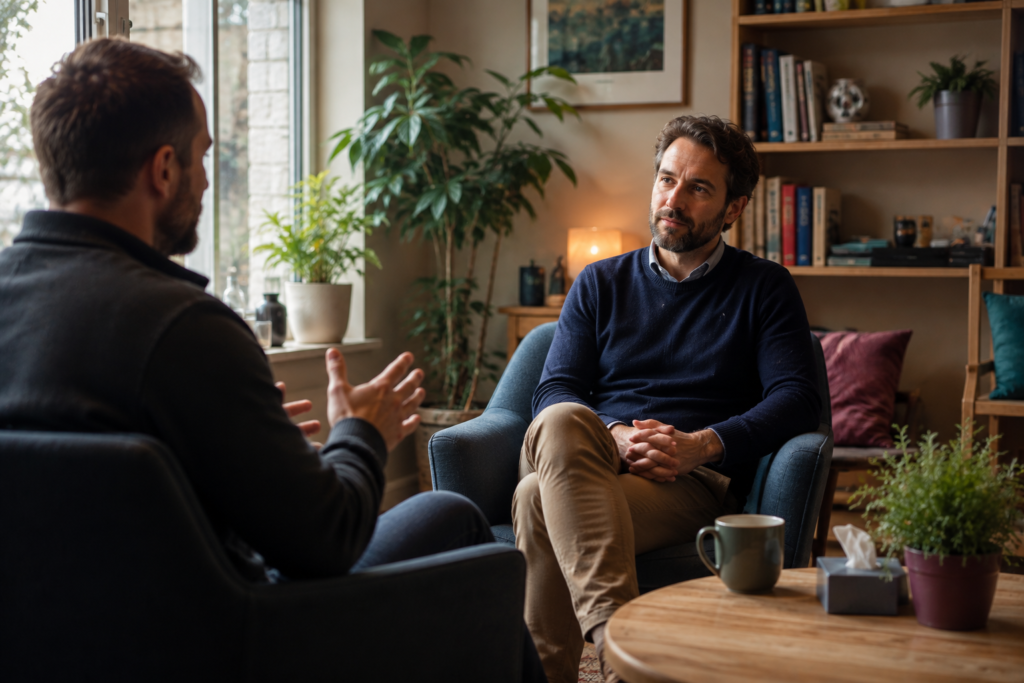
Looking back, I don’t think I can separate what I learned in counselling from the relationship in which I learned it.
Feeling genuinely listened to mattered.
Feeling that somebody was interested in understanding my experience mattered.
Feeling able to talk without having to present a polished version of myself mattered.
The therapeutic relationship isn’t simply a nice addition to counselling. Professional guidance from the IACP also emphasises the importance of a positive, collaborative relationship between therapist and client.
My experience of that relationship eventually affected the relationship I had with myself.
And that is probably the best answer I can give when someone asks me whether counselling works.
What if I'm not sure counselling will help me?
You don’t have to know before you start.
You also don’t have to arrive knowing exactly what’s wrong, what you want to talk about or what the answer should be.
I certainly didn’t.
Counselling can begin with something as simple as:
“I don’t really know where to start.”
If you’re considering counselling, finding someone you feel comfortable talking to matters.
Ask questions.
Notice how you feel in the room with them.
And give yourself permission to decide whether that counsellor feels right for you.
Counselling in Swords
At Summit Counselling and Psychotherapy Swords, we have a team of counsellors supporting adults, couples, young people and children with a range of emotional, mental health and relationship difficulties.
We offer a free 50-minute consultation, giving you an opportunity to meet a counsellor, talk about what’s bringing you to counselling and get a sense of whether working together feels right for you.
Book a free 50-minute consultation
You don’t need to arrive with the answers.
Sometimes understanding where you are is the first part of finding your way.
Helping you find your way.
About the author
Sean Adams is an Accredited Psychotherapist and founder of Summit Counselling and Psychotherapy Swords. His work is grounded in a person-centred approach, with an emphasis on genuine human connection, curiosity and creating a space where people can explore their experiences without judgement.