
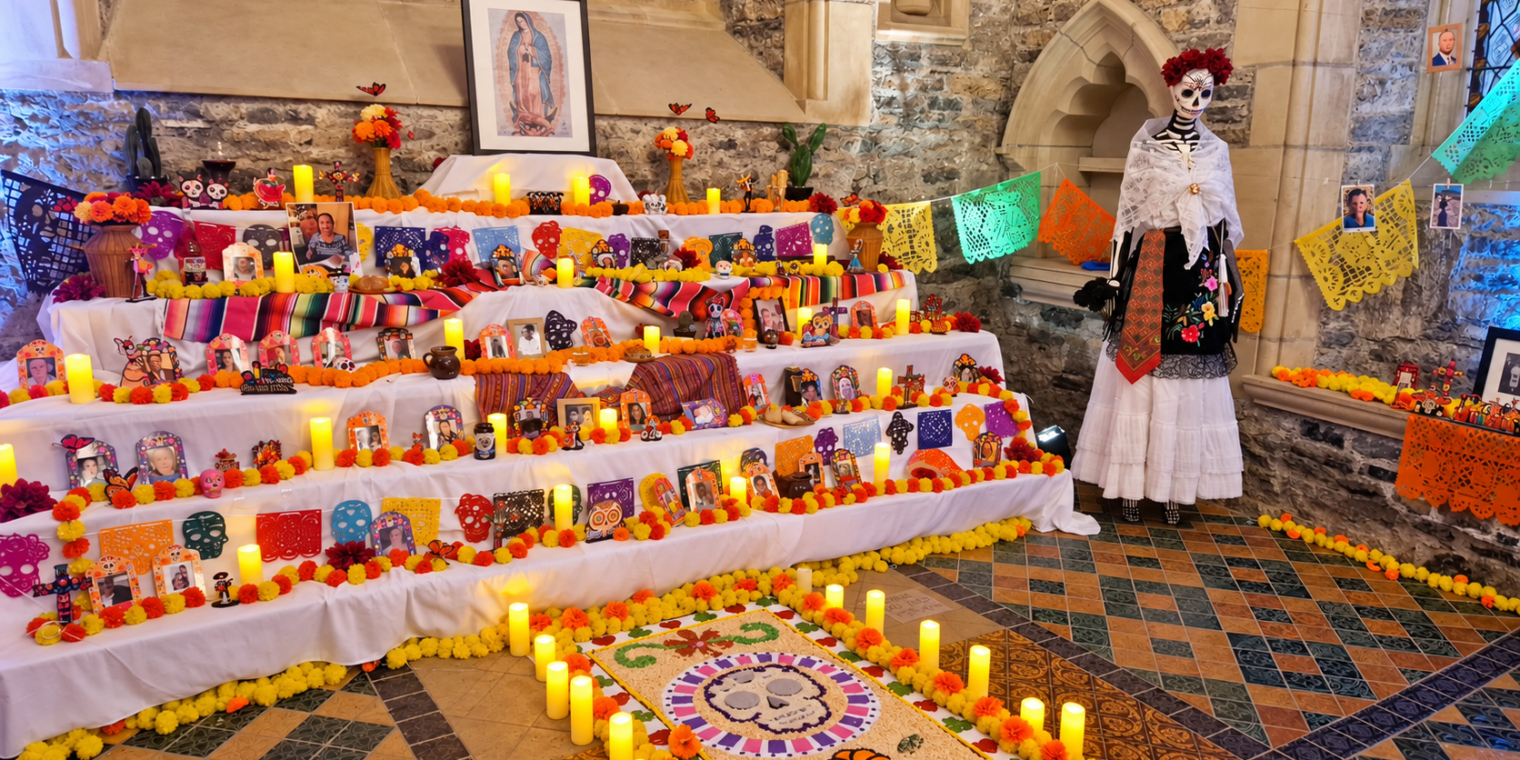
I recently attended the Day of the Dead event in Swords. It brought me back to thinking about my own father, his death, and how I share his memory with my children.
I don’t like the expression “move on” when we talk about grief. I prefer “move with”.
Why would I want to move on from the love of someone I’ve lost? My dad matters to me. His death hasn’t changed that. I want there to be room for him in my life, in our conversations, and in the stories I share with my children.
It also brought up something that feels important in my work as a counsellor: how do we make room for the people who have died, while continuing to live our own lives?
After a death, there can be a lot of support at the beginning. People call, check in and make time. Then, gradually, everyday life carries on. That is understandable. But for the person grieving, the absence is still there.
You might want to tell a story about someone. Say their name. Laugh about something they used to do. Yet you can find yourself holding back because you don’t want to upset anyone, or because you think people expect you to be doing better by now.
A community event centred on remembrance offers a different invitation. There is room to acknowledge that these people still matter.
What is the Day of the Dead, and what is an ofrenda?
Día de los Muertos, or Day of the Dead, is a Mexican tradition in which families remember and honour people who have died. A central part of the tradition is the ofrenda: an altar or display prepared to welcome and remember loved ones. The word means “offering”.
An ofrenda can include photographs, candles, marigold flowers, food and objects connected with the people being remembered. Within the tradition, these offerings welcome the souls of loved ones back for a visit. Customs vary between families and communities.
My father’s photograph was on my ofrenda. That made remembrance something I could share: a photograph to look at, a person to talk about, and a way to tell my children about their grandfather.
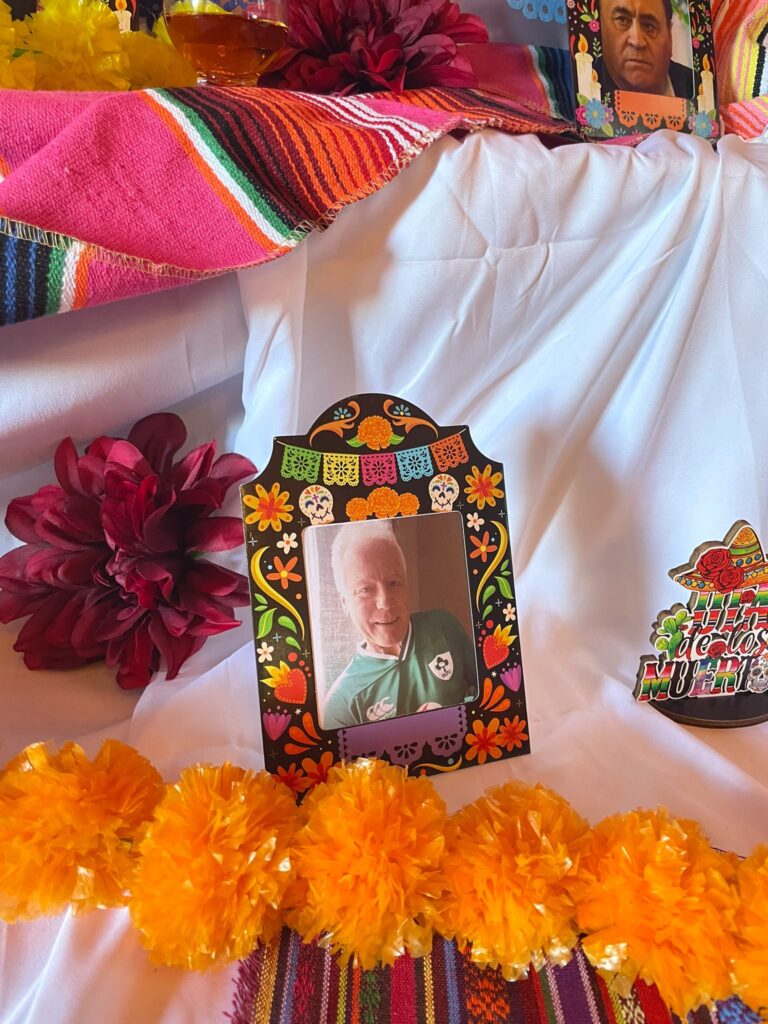
For me, having his photograph there gave him a place in what we were doing. My dad was part of the occasion, through his memory and through the love I still have for him.
You may recognise that wish to include someone you have lost. Perhaps you want their photograph at a family gathering, or to tell a story when something reminds you of them. You want there to be room for someone who still matters to you.
What does moving with grief mean?
For me, moving with grief means continuing to live while carrying my love for my father. It means allowing that relationship to have a place in my life, even though he is no longer here.
When someone dies, our relationship with them changes. But the things they meant to us do not simply disappear.
They may still influence how we parent, the food we cook, the music we listen to or the way we see ourselves. Sometimes we notice ourselves using one of their expressions and think, “I’m turning into my dad.”
There can be comfort in that. There can be sadness too.
There are still things to experience, relationships to care for and a life to live. My love for my dad comes with me into that life.
That place will look different for everyone. Nobody else gets to decide how often you should mention them or when their photograph should come down.
Sharing my father's memory with my children
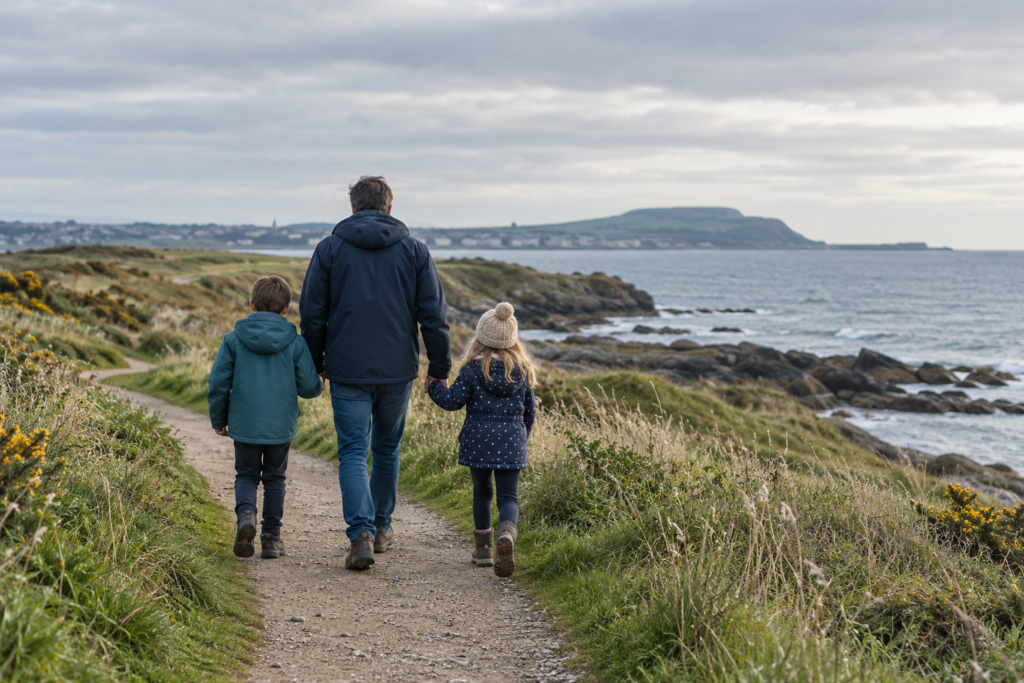
Sharing memories of my father with my children is a way of letting them know him. Of giving them a sense of who he was and what he meant to me. His place in our family doesn’t have to end because he is no longer here.
That is part of what feels meaningful to me about remembrance. A story gives us something to share about the person, beyond the fact that they died. There is a life to talk about. A relationship. The things that made them themselves.
There can be laughter in those conversations. There can be tears. Sometimes both arrive in the same story.
I want my children to know that we can talk about my dad. That loving someone and missing them can remain part of our family life.
What if remembering brings up difficult feelings?
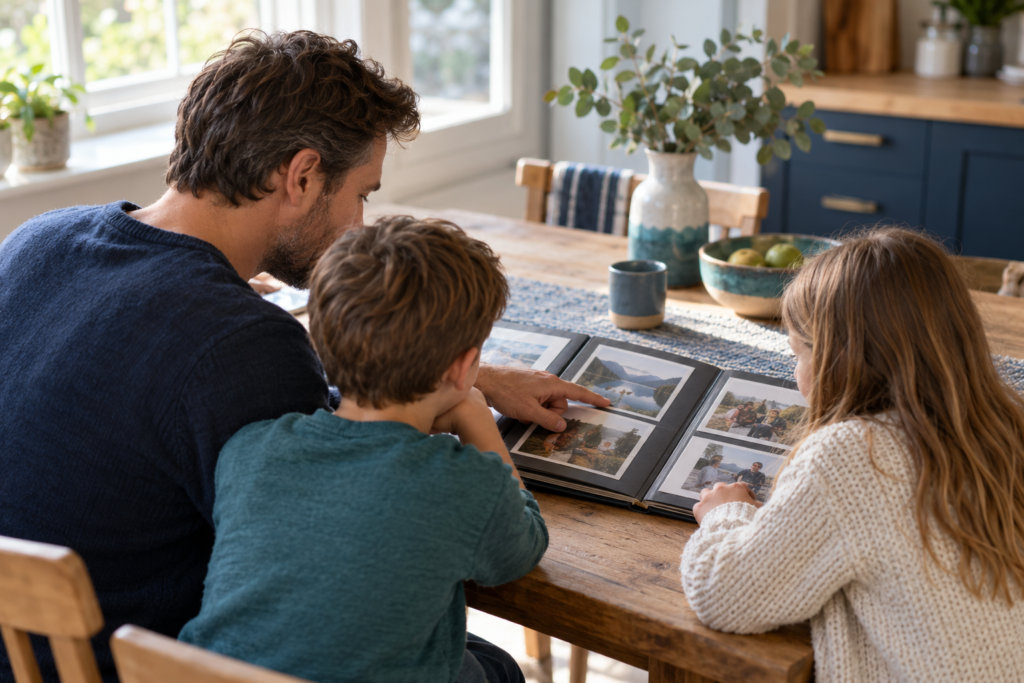
Remembering someone is not always comforting. A photograph might bring a smile one day and feel too painful to look at the next.
And not every relationship was straightforward. You may miss someone and feel angry with them. You may feel relief after a long illness, alongside sadness or guilt. You may be grieving conversations you never had or a relationship that never became what you needed.
You do not have to turn the person into someone perfect because they have died.
You might find yourself wondering whether you are grieving properly, especially when your feelings don’t match what you expected. You may feel sad, angry, relieved, numb, or unsure what you feel at all. You don’t have to tidy those feelings up before talking about them. There is room for what this loss is actually like for you.
How can we make space for remembrance?
You do not need to organise anything elaborate. If remembering feels right for you, it might mean cooking something they enjoyed, sharing a story with someone who knew them, visiting a meaningful place or listening to a song.
You might ask someone, “Would you like to tell me about them?”
That question leaves a choice. They may want to talk. They may not want to today.
In Ireland, many of us will recognise the place of stories, gatherings and anniversaries after a death. These are distinct traditions, but attending a celebration from another culture can prompt us to think about our own: what helps us feel connected, and where might we need more room?
There is no obligation to make remembrance public. Something private can matter just as much.
When might bereavement counselling help?
Many people find support through family, friends and community. Counselling is another option if you would value somewhere to speak openly, particularly when grief feels overwhelming or difficult to share.
You do not need to arrive with a clear explanation. You might only know that you feel different, that you are struggling, or that everyone else seems to have stopped asking.
At Summit Counselling and Psychotherapy in Swords, we offer space to explore bereavement and loss at your own pace. That can include talking about the person who died, the relationship you had, and what life feels like now.
In my work as a counsellor, I want there to be room to say someone’s name and share a memory without feeling that you should be further along by now. You may want to talk about someone who died last month or many years ago. They still matter. You are welcome to bring them into the conversation.
There is no requirement to find a positive meaning in what happened.
Remembering together in Swords
What I take from attending the Day of the Dead event is the value of making remembrance visible in our community.
People who have died can remain part of our conversations. We can speak about what we miss, what made us laugh and what was difficult. We can also listen without trying to make the sadness disappear.
Sometimes, being able to say someone’s name and have another person stay with us in that moment means a great deal.
For me, that includes keeping a place for my father and sharing his memory with my children. His love is something I want to carry with me.

If you would like support with grief or bereavement, you can contact Summit Counselling and Psychotherapy in Swords, North County Dublin, to ask about counselling. Visit www. summitcounselling.org..