
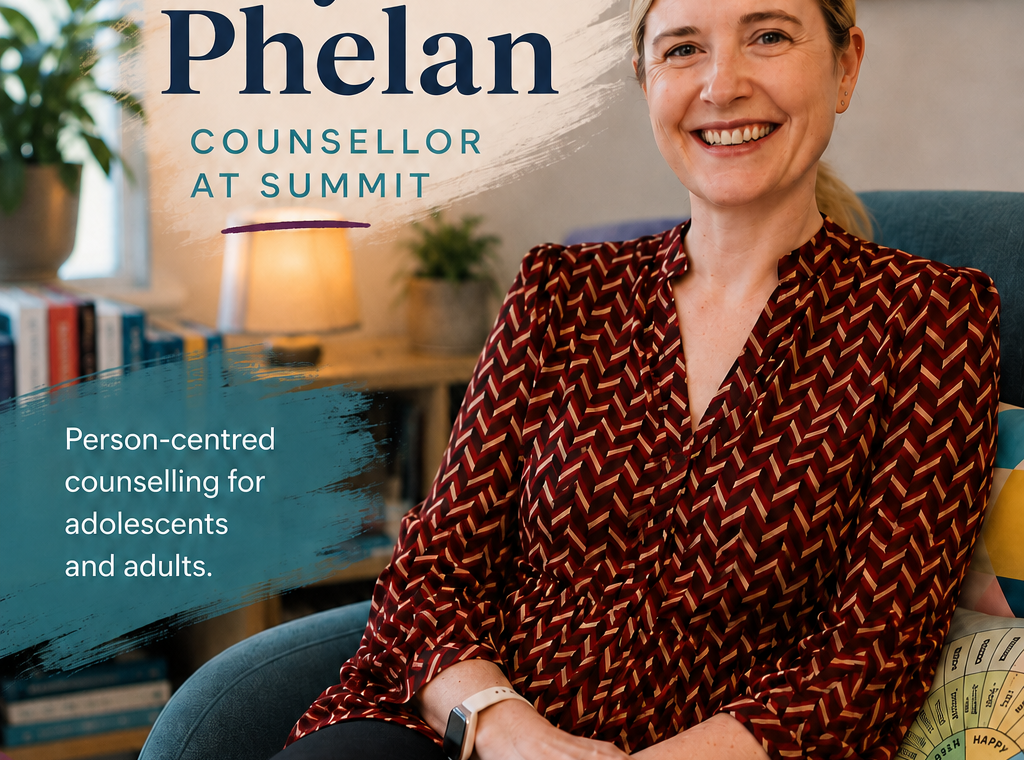
People come to counselling for all sorts of reasons.
You might be struggling with anxiety or low mood. Maybe a relationship has become difficult, you’ve experienced a loss, or you’re feeling overwhelmed by everything that’s going on.
Sometimes there isn’t one obvious reason at all. You might simply feel stuck, disconnected from yourself, or know that something needs to change.
You don’t need to have it all figured out before coming to counselling.
For me, that’s part of what counselling is for.
The foundation of how I work is person-centred counselling.
This means that I see you as the person who knows your own life and experiences best. My role isn’t to analyse you, tell you what’s wrong or give you a list of things you should do.
Instead, I want to create a relationship where you feel genuinely heard, understood and accepted.
I believe that when we have a safe enough space to talk honestly about what we’re experiencing, we can begin to understand ourselves differently.
That relationship is at the heart of how I work.
Why I also work integratively
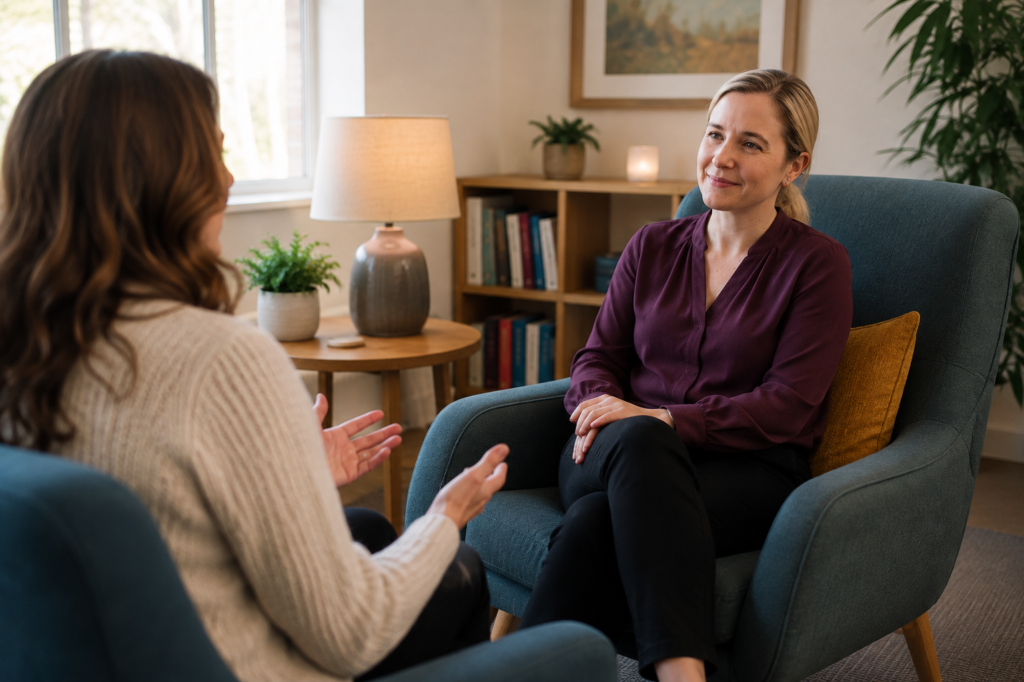
Although my foundation is person-centred, I work integratively because I don’t believe one approach will suit every person or every situation.
We’re all different. We have different personalities, relationships, experiences and ways of coping when things become difficult.
Depending on what you need, I may draw on other approaches, including cognitive approaches and mindfulness.
Rather than expecting you to fit into a particular model of counselling, we can find a way of working together that feels right for you.
Learning to be a little kinder to yourself
Self-compassion is something I’m particularly passionate about in my work with clients.
Many of us speak to ourselves in ways we would never speak to another person.
When something goes wrong, we blame ourselves. When we’re struggling, we tell ourselves we should be coping better. We can become our own harshest critic without even noticing we’re doing it.
Mindful awareness can help us begin to notice these thoughts and feelings without immediately judging ourselves for having them.
Self-compassion isn’t about ignoring difficulties or pretending everything is okay. It’s about learning to respond to ourselves with some of the same understanding, patience and kindness that we might naturally offer someone we care about.
For some clients, developing that different relationship with themselves can become an important part of counselling.
You don't need to know where to start
One of the things that can make starting counselling difficult is believing you need to know exactly what’s wrong or what you’re going to talk about.
You really don’t.
You might know you’re anxious but have no idea why. You might keep finding yourself in the same situations or relationship patterns. Perhaps you’ve lost confidence in yourself or you’re finding things harder to manage than you used to.
Sometimes all you know is:
“I don’t feel like myself anymore.”
That’s enough to start.
We can take some time together to understand what’s been happening.
Counselling for adolescents and adults
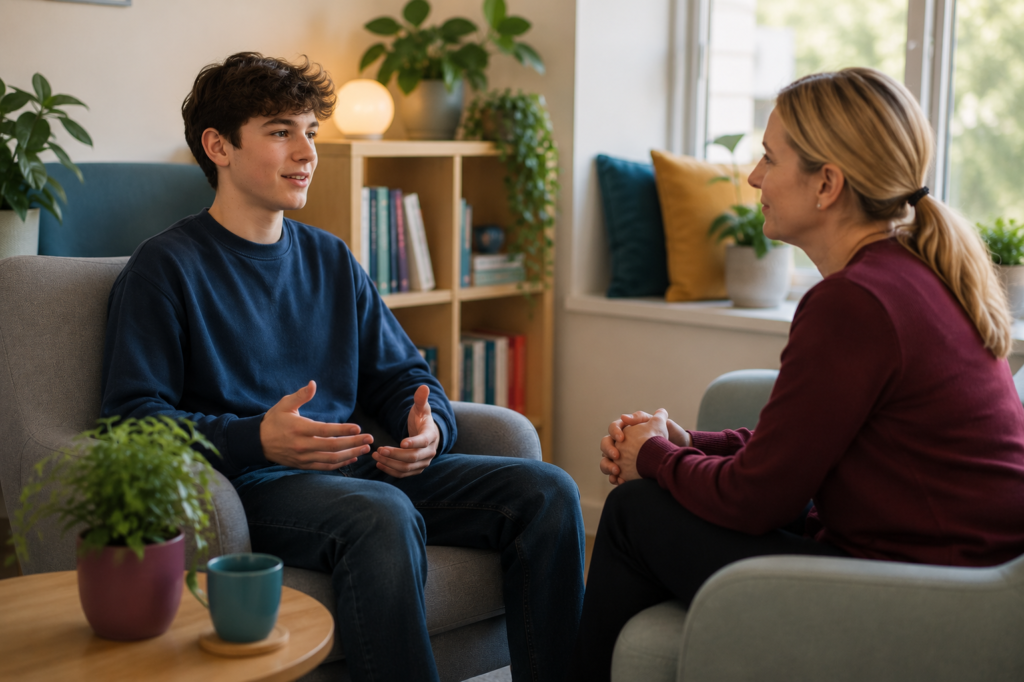
I work with both adolescents and adults at Summit Counselling and Psychotherapy in Swords.
For adolescents, difficulties might involve anxiety, self-esteem, friendships, school pressures, relationships or trying to understand themselves during a period when so much is changing.
As adults, we can find ourselves struggling with relationships, work, loss, confidence, stress or experiences from our past that continue to affect us today.
Whatever your age, I believe it’s important to have somewhere you don’t feel judged and don’t have to pretend that everything is fine.
Making sense of what you're experiencing
When we’re in the middle of something difficult, it isn’t always easy to see what’s happening clearly.
We can get caught in patterns of thinking, behaving or relating to other people without really understanding why.
Counselling gives us an opportunity to slow things down and become curious about what’s happening rather than immediately judging it.
We might begin noticing patterns, understanding what triggers certain emotions or recognising ways you’ve learned to cope when life has been difficult.
Sometimes understanding why we respond in certain ways can give us more choice about how we respond in the future.

What can I support you with?
I work with adolescents and adults experiencing a range of difficulties, including:
- Anxiety and excessive worry
- Depression and low mood
- Stress and overwhelm
- Low self-esteem and confidence
- Relationship difficulties
- Grief and loss
- Life changes and transitions
- Difficult emotions
- Feeling stuck or disconnected
- Self-criticism
- Personal growth and self-understanding
Often these experiences aren’t separate from each other.
Anxiety might be connected to a relationship. Low confidence might be connected to an earlier experience. Stress might be affecting how you feel about yourself and how you connect with the people around you.
My person-centred and integrative approach allows us to explore you as a whole person, rather than concentrating only on a symptom or label.
Starting counselling with me in Swords
I provide person-centred and integrative counselling for adolescents and adults at Summit Counselling and Psychotherapy in Swords, Co. Dublin.
If you’ve been thinking about counselling but you’re unsure what you would say when you get there, that’s okay.
You don’t need a prepared story and you don’t need to have the answers.
We can start with what’s happening for you now.
From there, we can begin to understand things together, with curiosity and compassion, and explore what moving forward might look like for you.